Pages

Tampilkan postingan dengan label Money. Tampilkan semua postingan

Minggu, 12 Juli 2015

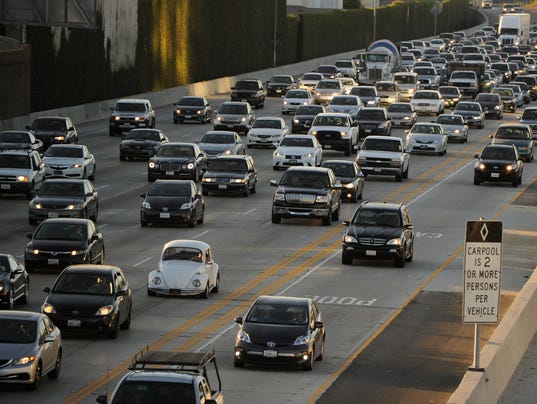
Average age of cars on U.S. roads breaks record


The average age of vehicles on the road in the U.S. is rising, even as consumers snap up more new ones — a paradox attributable to substantial increases in reliability.
The typical car on the road in the U.S. is a record-high 11.5 years old, according to a new IHS Automotive survey.
Yet Americans are buying cars at an annualized rate of more than 17 million vehicles, marking a high not seen since before the Great Recession. In fact, U.S. vehicle owners bought 42% more cars than they scrapped in 2014, according to IHS. The number of light vehicles registered in the U.S. hit an all-time high of 257.9 million units.
How are vehicles getting older, while Americans are buying newer cars, too?
Simple: They're either keeping the old ones along with the new ones — know anyone who bought a new car and kept their old one in the driveway? — or the vehicle made its way into the used-car market, where someone else bought it..
"Vehicles are simply lasting longer than ever before," Mark Seng, global aftermarket practice leader at IHS Automotive, told USA TODAY. "The consumer is hanging onto their vehicle longer than ever before."
Automakers have substantially improved the reliability of their vehicles. Although it's still possible to buy a "lemon," it's getting increasingly difficult.
Analysts say that most of the major automakers have overcome major quality issues. Now, industry surveys such as the J.D. Power and Associates Initial Quality Study typically examine minor quality issues such as ease-of-use of infotainment systems.
The number of vehicles on the road that are at least 25 years old is about 14 million. That's up from about 8 million in 2002. Those are vehicles made in 1990 or earlier.
Meanwhile, the number of vehicles that are 16 to 24 years old is 44 million. That's up from 26 million in 2002, according to IHS.
"There’s quite a bit of evidence of these vehicles lasting longer, staying on the road longer, people hanging on to them longer," Seng said.
For the aftermarket industry, this is encouraging news. Newer cars don't need many repairs — and are likely to find their way into dealerships to be fixed when they do have problems.
Independent vehicle repair shops are also capitalizing on the wave of older vehicles needing repairs, Seng said.
"As the vehicle gets older, they get nearly all of that repair business, as opposed to that dealer channel," he said.
IHS projected that the number of vehicles that are older than 12 years will rise by 15% over the next five years.

Sabtu, 11 Juli 2015

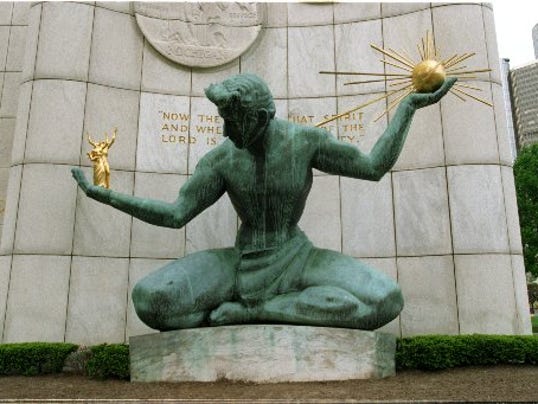
Detroit's bond rating improves from junk status


DETROIT — Seven months out of bankruptcy, Detroit won a crucial vote of confidence Wednesday in its ability to borrow as the credit-rating agency Standard & Poor’s rated as investment grade $245 million in bonds the city will soon sell to pay for upgrades to its police and fire departments and other critical public services.
S&P rated the bonds at "A/stable," considered an upper-medium grade and a significant improvement for a city whose ratings slid well into junk status as its financial condition careened toward collapse and the nation’s largest-ever municipal bankruptcy filing in 2013. The sale is the city's first step toward rebuilding its credit-worthiness in the public bond markets.
"When you've lost your financial credibility over many years, you have to rebuild it one step at a time, and today is a big step," Mayor Mike Duggan told the Free Press.
Duggan said another big step was the city balancing its budget last year for the first time in a decade, and he and the City Council are on their way to a second balanced budget for 2015-2016.

Jumat, 10 Juli 2015

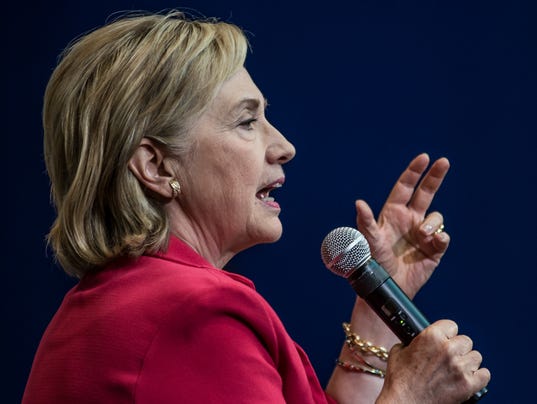
Delamaide: Wall Street is in Hillary Clinton's corner


WASHINGTON — Behind the scenes, Hillary Clinton's campaign for president belies the Wall Street reform rhetoric that she uses to appeal to left-wing Democratic voters.
It was Deep Throat's reputed advice to reporters in the Watergate scandal that made "follow the money" the iconic slogan for those seeking to ferret out corruption in U.S. politics.
But the political slush fund in Nixon's 1972 re-election campaign seems quaint in the wake of Citizens United, super PACs and the even darker pools of campaign funds that are the forms of corporate payoffs to politicians nowadays.
Much of the money is impossible to follow as dubious non-profit organizations mask the identity of their donors and the U.S. Chamber of Commerce fights efforts to make companies disclose their political contributions.
However, we can still see the tip of the iceberg through the tatters of campaign finance law that remain. And what that tip tells us is that Wall Street is still squarely behind Clinton.
Moreover, the drip feed of policy prescriptions that Clinton has embarked on (there's more to come "over the course of this campaign," she says) obscures the fact that there's not really that much reform there.
Her proposals for reforming capital gains tax by scaling up the amount of time it takes to get truly favorable rates, for instance, met mixed reviews. Some critics say it won't accomplish her stated goal of getting companies to look beyond quarterly profits.
In any case, it's small potatoes compared to forthright calls by her rivals for the Democratic nomination, Vermont Sen. Bernie Sanders and former Maryland governor Martin O'Malley, to break up the banks and impose more drastic restrictions on bank activity.
In fact, Clinton has rejected the idea of reintroducing a Glass-Steagall Act to separate commercial banks from investment banking, saying the issue is "more complicated" than that — echoing excuses by the Obama administration for not following through on more aggressive financial reform.
One of the things making it "complicated" might be the unstinting support Clinton is getting from Wall Street.
An analysis of the most recent federal campaign contribution data by the Huffington Post found Clinton in the lead in donations from Wall Street with $432,610 from bank executives, employees and their spouses.
Republican hopefuls Jeb Bush and Marco Rubio trailed with $353,150 and $105,669, respectively.
Again, this is the tip of the iceberg, because it doesn't include funds flowing into many super PACs and the very dark 501(c)(4) organizations like Americans for Prosperity that ostensibly promote social welfare but are shams for political advocacy.
This is on top, in Clinton's case, of the millions she and her husband, the former president, collected in "speaking fees" in the months prior to the official declaration of her candidacy, including from Goldman Sachs, JPMorgan Chase and other Wall Street firms.
These ties are well known, but the fact that this support continues in the face of Clinton's leftish rhetoric tells us Wall Street is not too worried about anything Clinton may do if she were to win the election.
This susceptibility to influence by mega-donors is not confined to Wall Street or financial services.